The landscape of education in the United States is undergoing a significant transformation. For decades, a child’s educational opportunities were largely determined by their zip code. Today, that model is evolving rapidly. Families now have more control than ever before, thanks to the expansion of school choice, Educational Savings Accounts (ESAs), and the integration of advanced technologies like artificial intelligence (AI) and virtual reality (VR).
School Choice and Educational Savings Accounts (ESAs)
In 2026, families across the country are experiencing unprecedented flexibility in how they educate their children. Educational Savings Accounts (ESAs) are at the center of this shift. These programs allow public education funding to follow the student, rather than being tied to a specific school or district.
This approach empowers parents to take a more active role in shaping their child’s education. Funds can be used for private school tuition, homeschooling resources, specialized programs, and more.
States like Florida and Texas have taken this a step further by implementing universal ESA programs. This means that all families regardless of income or location are eligible. As a result, education is no longer restricted by geographic boundaries, opening the door to more personalized and effective learning experiences.
Virtual Reality: A New Dimension of Learning
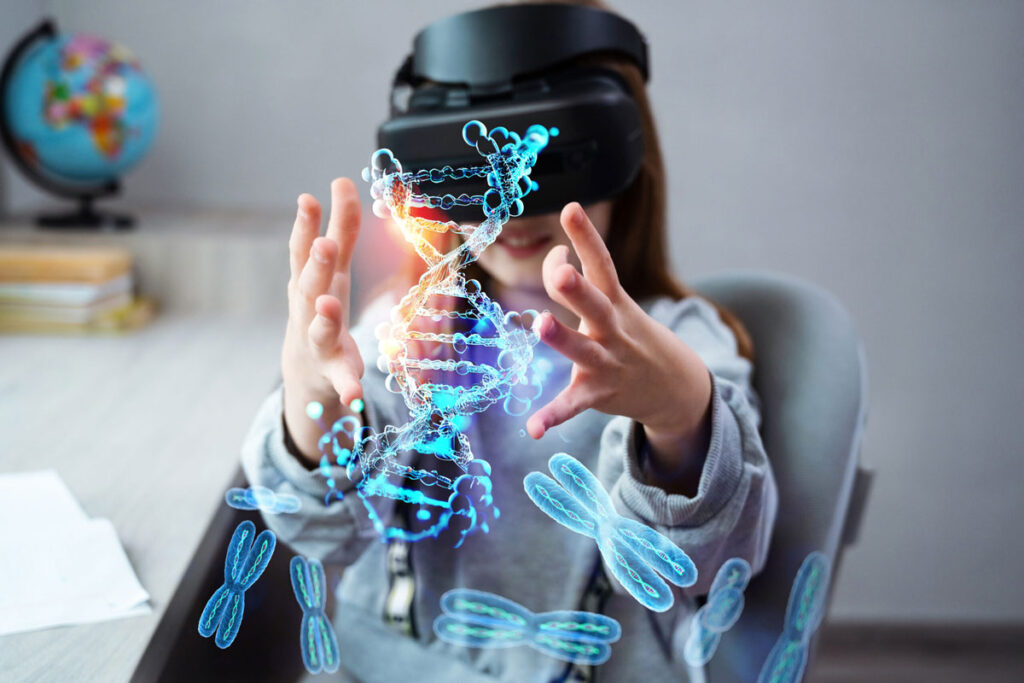
Virtual reality is redefining what it means to be in a classroom. Unlike traditional online learning tools that rely on video calls and static content, VR places students inside immersive, interactive environments.
Instead of watching a lesson, students can experience it. They can walk through ancient Rome, explore the surface of the moon, examine the inner workings of a cell, or relive key moments in U.S. history.
This “Magic School Bus”-style approach transforms passive learning into active exploration. Teachers guide students through these virtual environments, creating meaningful engagement and stronger connections than conventional virtual classrooms.
AI and Hyper-Personalized Education
Artificial intelligence is enabling a shift away from the traditional one-size-fits-all model of education. With AI-powered tools, learning can now be tailored to each student’s pace, strengths, and interests.
This level of personalization allows students to take a modular approach to their education. For example, athletes, musicians, and other specialized learners can design schedules that fit their unique lifestyles while still achieving academic success.
Interactive, concept-based learning—such as manipulating 3D models of cells or understanding valence electrons through hands-on simulations—has shown to significantly improve retention and comprehension.
In states like Florida, these innovative approaches have already contributed to measurable improvements in student growth and performance.
From Pilot Programs to Nationwide Impact
The roots of this transformation began in underserved areas. Early virtual reality education programs were piloted in rural Mississippi, where access to high-quality educational resources was limited.
Following successful implementation, the model expanded through partnerships with states like Florida, where it officially launched in 2021. Since then, it has continued to grow, reaching students in both urban and rural communities.
The mission behind these initiatives is clear: to deliver world-class education to every student, regardless of their location. Whether a child lives in a major city or an education desert, the goal is to provide equal access to high-quality learning opportunities.
A New Era of Education
The convergence of school choice, ESAs, AI, and virtual reality marks the beginning of a new era in American education. Families are no longer limited by geography, and students are no longer confined to traditional classroom models.
As technology continues to evolve, education is becoming more flexible, immersive, and personalized. This shift is not just changing how students learn—it is redefining what education can be.