Fall has a way of slowing things down, just enough.
The light changes. The air cools. And somewhere between pumpkin patches and early sunsets, there’s a real opportunity to learn together as a family, without it ever feeling like “extra school.” Here are five activities that make the most of the season, and quietly build real academic skills along the way.
1. Take an Apple Picking or Orchard Trip
An orchard is a science and math lesson hiding in plain sight. Ask younger students to sort apples by variety, color, or size. Older students can estimate the weight of a full bag before it hits the scale, then check the math once you check out.
It’s also a natural opening for a conversation about where food comes from: how an orchard manages a harvest, why some varieties ripen earlier than others, what a “good” growing season actually depends on. None of it needs to feel like a lesson. It’s just a walk through an orchard with a few good questions along the way.
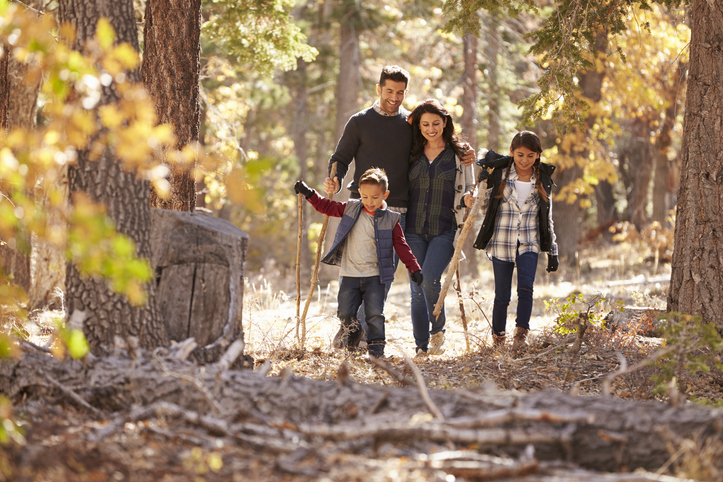
2. Go on a Fall Foliage Nature Walk
Changing leaves are one of the clearest, most visual science lessons available all year. A walk through a park or a trail is a chance to talk about chlorophyll, why leaves change color, and why some trees hold their color longer than others.
Bring a small notebook and have each student collect a few leaves to sketch or press. It turns a simple walk into a first pass at observation and recordkeeping, the same habits that show up later in a formal science class.
3. Visit a Local Historical Site
Many towns hold a piece of history that rarely comes up in a regular week: a preserved farmhouse, an old battlefield, a founding-era building, a local museum with a fall exhibit. Standing in a real place tends to make history stick in a way a textbook page doesn’t.
For families building on a classical education model, this is an easy way to bring history off the page. Walk through the site, then talk on the drive home about what daily life would have looked like there, or what decisions the people who lived or worked there might have faced.
4. Cook or Bake a Seasonal Recipe Together
A pot of soup or a batch of pumpkin bread is a math lesson with a reward at the end. Measuring cups and spoons introduce fractions in a way that actually means something. Doubling a recipe for a bigger family gathering is a real-world multiplication problem nobody has to be talked into solving.
It’s also a good moment to talk about sequencing and following multi-step instructions, skills that carry over directly into schoolwork, even though nobody’s calling it that at the time.
5. Read a Classic Book Together as a Family
Fall evenings, with earlier sunsets and more time indoors, are made for reading aloud. Choosing a classic novel or a collection of short stories to work through as a family builds vocabulary, comprehension, and discussion skills for every age at the table, not just the student doing the reading.
Stop after a chapter and ask what a character should have done differently, or what the author might be trying to say. Those conversations are the same kind of thinking a classical education asks students to practice in the classroom, just happening around the kitchen table instead.
Learning That Doesn’t Feel Like Learning
None of these activities require a curriculum or a lesson plan. They just require a little intention about how the season gets spent. At Optima Academy Online, that same idea shapes the classroom too: live, teacher-led classes built on a classical education foundation, with real discussion and real thinking built into every subject, not layered on top of it.