Halloween is full of excitement, imagination, spooky surprises. What if some of that magic could inspire a little learning, too?
From glowing ghosts to color-changing potions, Halloween offers plenty of opportunities to explore science, creativity, problem-solving. With a few household materials, families can turn seasonal fun into hands-on learning experiences.
Here are five activities that make learning feel like a Halloween treat!
1. Create Glowing Ghost Jars
Turn ordinary plastic jars into glowing ghost decorations while exploring how light travels through different materials.
What You’ll Need
Clear plastic jars, white tissue paper, black construction paper, tape, child-safe scissors, battery-operated LED tea lights.
How to Make Them
Wrap each jar in white tissue paper, then add ghostly faces cut from black construction paper. Place an LED tea light inside, dim the lights, watch your ghosts glow!
Where the Learning Happens
Tissue paper is translucent, allowing some light to pass through. Black construction paper is opaque, blocking most of the light.
Encourage your child to add another layer of tissue paper. Does the ghost become brighter or dimmer? What happens when different colors are used?
2. Build a Spooky Shadow Theater
Bring Halloween characters to life through storytelling, creativity, a little science.
What You’ll Need
Black construction paper, craft sticks, tape, child-safe scissors, a flashlight.
How to Make It
Draw Halloween characters such as bats, ghosts, pumpkins. Cut them out, then attach each shape to a craft stick.
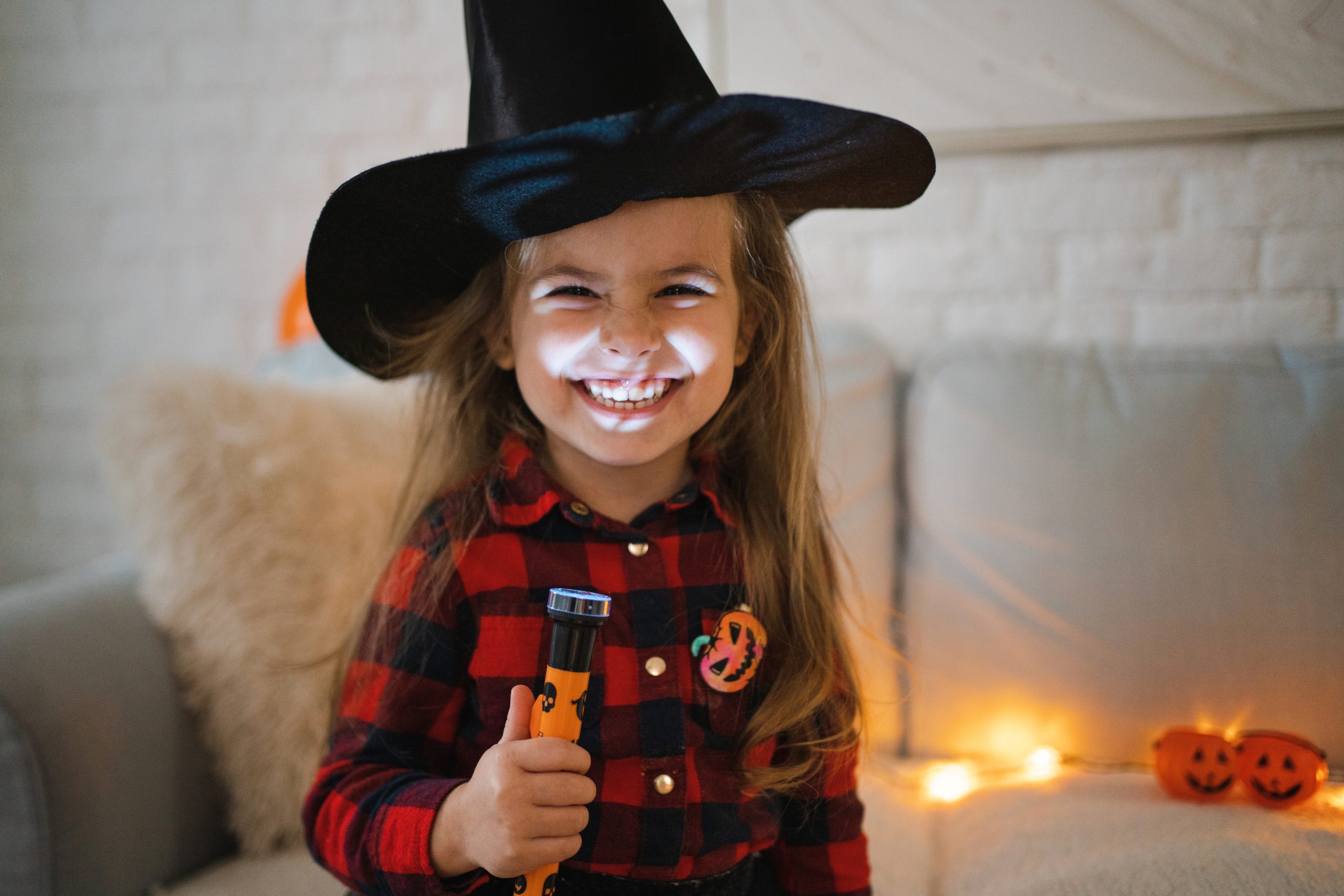
Shine a flashlight toward a blank wall. Hold the paper characters between the flashlight and the wall to create shadows. Move them closer to the light, then farther away.
Once your child has experimented with the shadows, encourage them to create a spooky story featuring their characters.
Where the Learning Happens
Shadows form when an object blocks light. Changing the distance between the object, light source, wall changes the shadow’s size.
Challenge your child to make the largest shadow possible without changing the actual puppet.
3. Engineer a Mini Haunted House
Give your child the chance to become an engineer by building a miniature haunted house!
What You’ll Need
Small cardboard boxes, construction paper, tape, craft sticks, markers, child-safe scissors, battery-operated LED lights.
How to Make It
Start with a simple sketch of a haunted house. Use cardboard boxes to create the structure, then add windows, doors, towers, spooky decorations.
Encourage your child to test their design along the way. Does the roof stay in place? Can the house stand without tipping over?
Add an LED light inside for a spooky finishing touch.
Where the Learning Happens
Building a haunted house introduces balance, structural stability, engineering design.
When something doesn’t work, encourage your child to adjust the structure, test a new approach, try again.
4. Make a Constellation Pumpkin Lantern
Explore the night sky while creating a glowing Halloween decoration inspired by real constellations.
What You’ll Need
Orange construction paper, pencil, tape, printed constellation guide, hole punch, battery-operated LED tea light.
How to Make It
Help your child choose a constellation, such as Orion or Cassiopeia. Mark its stars on orange construction paper, then punch small holes where each star appears.
Roll the paper into a cylinder, secure it with tape, then place it around an LED tea light.
Dim the lights to reveal the glowing star pattern!
Where the Learning Happens
Constellations are recognizable patterns of stars viewed from Earth.
Ask your child to compare their lantern with the original constellation guide. Can they recognize the same shape?
Older students can explore why different constellations appear in the sky throughout the year.
5. Brew a Color-Changing Witch’s Potion
Add a little Halloween magic to science with a potion that changes color right before your eyes!
What You’ll Need
Red cabbage, water, lemon juice, baking soda, three clear plastic cups.
How to Make It
Have an adult soak chopped red cabbage in hot water until the liquid turns purple. Strain the cabbage, allowing the liquid to cool completely.
Pour the purple liquid into three cups. Leave one untouched, add lemon juice to the second, then add baking soda dissolved in water to the third.
Watch as the potions change color!
Where the Learning Happens
Red cabbage contains natural pigments that change color depending on acidity.
Lemon juice is acidic, often turning the liquid pink. Baking soda is mildly basic, producing blue-green shades.
Ask your child to predict what will happen before adding each ingredient. What do they notice about the different colors?
Safety reminder: Adult supervision is recommended. Use battery-operated lights instead of flames, supervise cutting tools, keep small materials away from young children. Adults should handle hot water preparation. Allow the potion to cool completely before use. Never drink experiment mixtures.
A Little Halloween Magic Goes a Long Way
Learning doesn’t have to feel like homework.
A glowing ghost can teach children about light. A haunted house can introduce engineering. A mysterious potion can reveal the science behind chemical reactions.
Activities like these encourage curiosity, creativity, problem-solving while giving families an opportunity to explore something new together.
At Optima Academy Online, we believe engaging learning experiences help scholars build confidence, think independently, discover the world around them.
This Halloween, encourage your child to experiment, create something spooky, enjoy the excitement of learning.
Happy Halloween from Optima Academy Online!