Every parent wants their child to thrive at school. But what happens when the signs point in the opposite direction? What if your child used to love learning and now dreads Monday mornings? What if their grades are slipping despite real effort, or their confidence is quietly eroding?
Sometimes a struggling child does not need more tutoring or stricter routines. Sometimes they need a different environment altogether. Recognizing that distinction is one of the most important things you can do as a parent.
This guide will walk you through the key warning signs, help you understand what may be driving them, and offer a clearer picture of what a better-fit school environment might look like for your family.
1. Your Child Has Developed a Persistent Reluctance to Attend School
Occasional school-day grumpiness is normal. Persistent dread is not. If your child regularly complains of stomachaches or headaches on school mornings, cries before getting on the bus, or asks repeatedly to stay home, pay attention. These are often physical expressions of emotional stress.
When this pattern continues for weeks or months rather than a few days, it is worth asking whether the school environment itself is the source of the problem, not just a temporary adjustment period.
2. Their Academic Performance Does Not Reflect Their Actual Ability
You know your child. You have seen them light up while building something, mastering a video game, writing stories for fun, or diving into a topic they love. If that same child is consistently underperforming at school, the mismatch may not be about intelligence or work ethic.
Traditional school environments are structured around standardized pacing. Children who learn faster, slower, or differently than the assumed average often fall through the cracks, not because they are less capable, but because the format does not fit the way they process and retain information.
3. Social Struggles Are Affecting More Than Just Friendships
School is a social environment, and not every child thrives in the particular social dynamics of a large traditional classroom. If your child is being bullied, excluded, or consistently struggling to find their place among peers, the effects reach further than lunchtime loneliness.
Chronic social stress impacts focus, memory, and motivation. Children who feel unsafe or overlooked at school often carry that anxiety into every other part of their day. A change in environment can sometimes do more for a child’s social development than any amount of coaching or therapy, simply by placing them among peers who share their interests and values.
4. Teachers and School Staff Are Not Meeting Your Child Where They Are
This is not a criticism of individual educators, who are often working with far too many students and far too few resources. It is simply an honest observation: in many traditional school settings, the teacher-to-student ratio makes individualized attention nearly impossible.
If your child has specific learning needs, whether they are gifted, have a diagnosed learning difference, or simply have a unique learning style, and the school has been unable to address those needs despite your requests and conversations, it may be time to explore environments designed for greater flexibility and personalization.
5. Their Love of Learning Has Faded
This one can be easy to miss because it tends to happen gradually. A child who once asked endless questions, stayed up late reading, or eagerly shared what they learned at dinner slowly stops doing those things. School starts to feel like something that happens to them rather than something they are part of.
When curiosity dims, it is a signal worth taking seriously. Children are naturally wired to learn. If an environment is consistently suppressing that instinct, it is worth asking what a different approach might awaken.
6. Anxiety or Behavioral Changes Are Appearing at Home
School stress does not stay at school. If your child has become more irritable, withdrawn, tearful, or prone to outbursts since starting at a particular school or grade, the connection deserves exploration. The same is true for changes in sleep, appetite, or interest in hobbies they once enjoyed.
These shifts are often the clearest early indicators that something is wrong, because children frequently do not have the language or awareness to tell you directly that they are struggling.
What a Different Environment Might Look Like
Recognizing the signs is the first step. The next is understanding what alternatives exist and what might actually fit your child better.
Families today have more options than ever. Online schools, hybrid models, microschools, classical academies, and homeschool cooperatives each offer something different. The key is finding the combination of flexibility, community, rigor, and support that aligns with how your child actually learns.
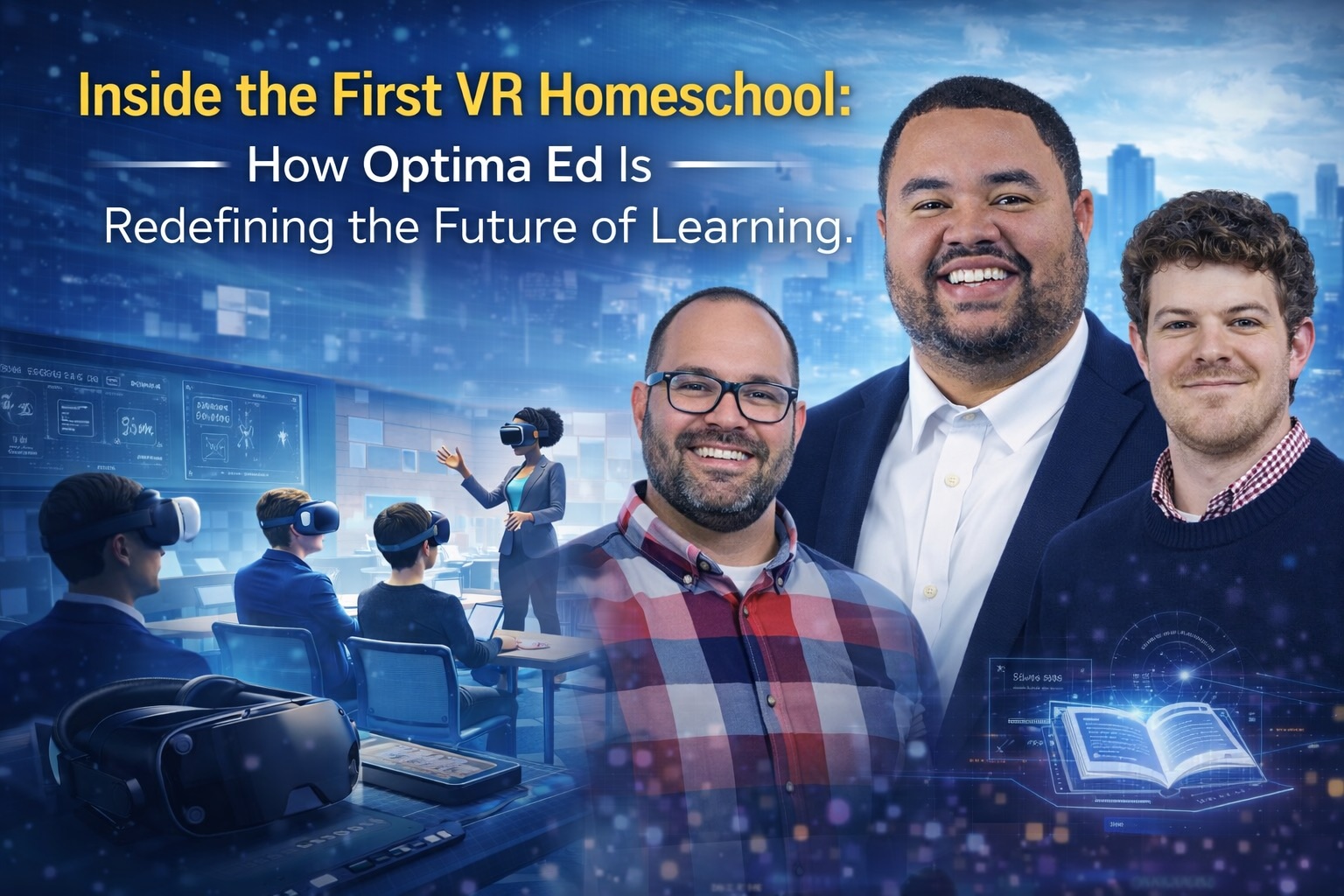
At Optima Academy Online, we work with families who have arrived at this crossroads and are looking for something different without giving up academic excellence or a genuine sense of community. Our model blends classical liberal arts education with immersive virtual reality experiences, giving students a rigorous and engaging curriculum they can access from anywhere.
We serve military families, homeschool families, and students who have not found their fit in traditional settings. Whether a family needs full-time enrollment or a la carte course options, our approach is designed to meet students where they are and challenge them to grow.
Questions Worth Asking Yourself
If you are uncertain whether a school change is the right call, here are a few questions to sit with:
Has your child’s disposition toward school changed significantly over the past year, or is this a longer-standing pattern?
Have you communicated your concerns to the school, and have those conversations led to meaningful change?
When you imagine your child in a smaller, more flexible, or more personalized environment, what do you picture? Does that image feel more aligned with who your child actually is?
What does your child say when you ask them directly how they feel about school?
There are no universally right answers, but these questions tend to bring clarity.
A Final Word for Parents Who Are Hesitating
Changing schools feels like a big decision, and it is. But staying in an environment that is not working also has costs, some of which are visible and some of which quietly compound over time.
Trusting your instincts as a parent is not recklessness. It is attentiveness. You have been watching your child longer and more carefully than anyone else has. If something feels wrong, it is worth investigating, not dismissing.
If you are curious about what Optima Academy Online offers and whether it might be a better fit for your family, we would welcome the conversation. Families can explore our programs, attend a virtual information session, or reach out to our admissions team directly to learn more.
Your child deserves an environment where they can genuinely flourish. Finding that environment is always worth the effort.