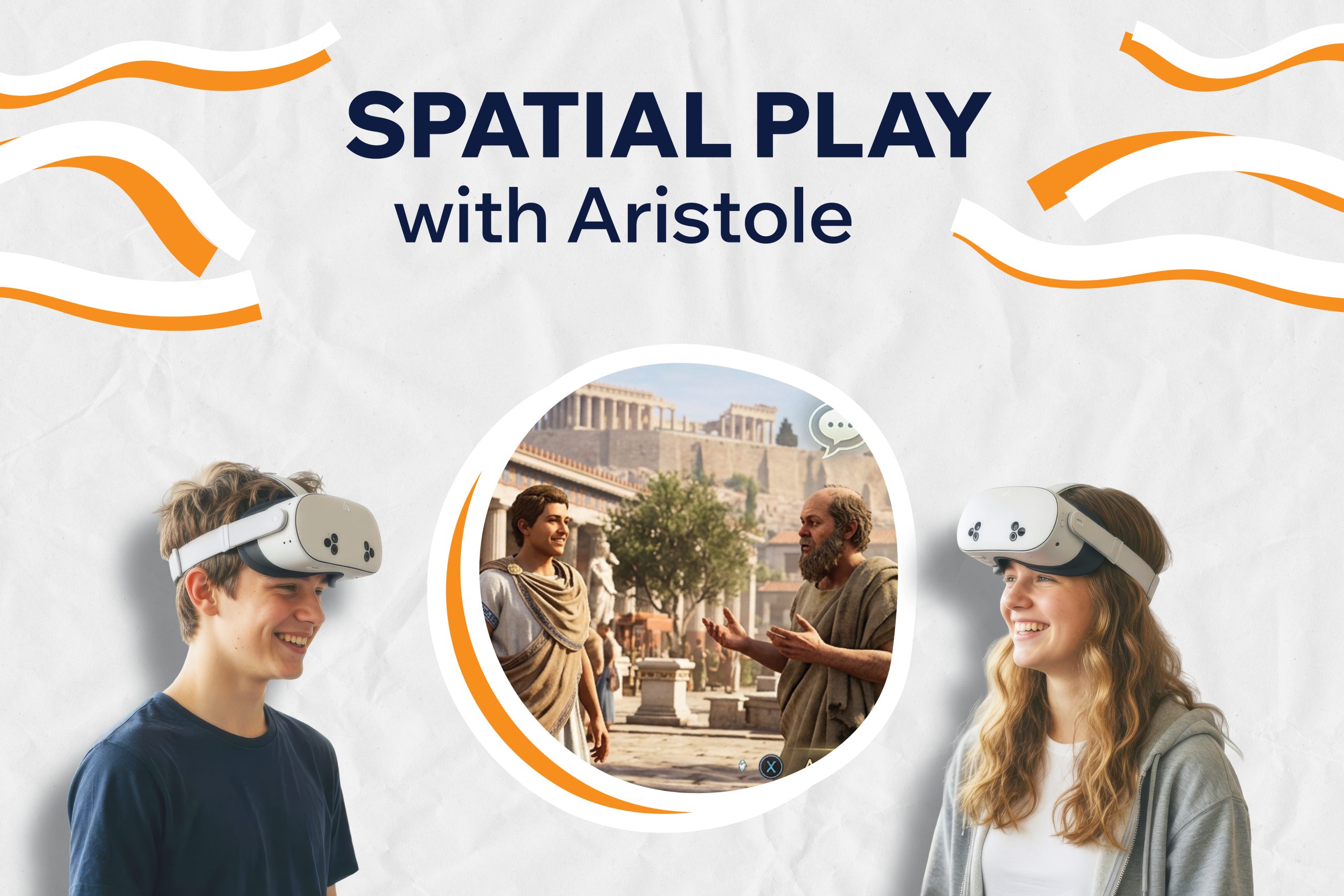
If you close your eyes and picture classical education, you might see leather-bound books, Latin declensions on a chalkboard, and students gathered around a wooden table in Socratic dialogue.
You probably don’t picture a student standing inside ancient Rome wearing a VR headset.
And yet, here we are.
The idea that classical education and technology are opposites is one of the most persistent myths in modern schooling. In reality, when used thoughtfully, technology does not compete with classical education. It can deepen it.
Let’s make the case.
First, What Is Classical Education Really About?
At its core, classical education is not about nostalgia. It is about formation.
It emphasizes:
-
The Trivium: grammar, logic, and rhetoric
-
Great books and primary sources
-
Socratic dialogue and thoughtful discussion
-
The cultivation of virtue and wisdom
-
Training students how to think, not what to think
Classical education is rooted in the pursuit of truth, goodness, and beauty. It forms the whole child intellectually, morally, and culturally.
Notice something important: none of these principles require the absence of technology.
Classical education is a philosophy of learning, not a prohibition list.
The Real Question Isn’t “Technology or Classical?”
It is this:
Does the technology serve the formation of the student?
If technology distracts, fragments attention, or replaces deep reading with scrolling, it undermines classical goals.
But if technology:
-
Expands access to primary sources
-
Makes complex ideas visible and experiential
-
Supports students with unique learning needs
-
Strengthens dialogue and collaboration
Then it becomes a tool in service of classical formation.
The difference is not the device. It is the intention.
A Historical Perspective: Classical Education Has Always Used the “New Tools”
When the printing press emerged, some feared it would dilute scholarship.
When blackboards became common, they were once modern innovations.
Even bound books were once new technology.
Classical educators have always used the best tools available to communicate enduring ideas.
Technology, in itself, is not unclassical. Unexamined use of technology is.
How Technology Can Strengthen Classical Learning
Let’s move from theory to practice.
1. Bringing History to Life Through Immersion
Reading about ancient Rome forms the mind.
Stepping into a 3D reconstruction of the Roman Forum while discussing Cicero forms memory and imagination alongside it.
When students can explore historical sites, examine architecture up close, or stand inside pivotal moments in history, they gain context that deepens their understanding of primary texts.
The technology does not replace the Great Books.
It illuminates them.
2. Enhancing Logic and Mathematics Through Visualization
Classical education values precision, order, and reason.
Modern tools can make abstract concepts tangible. Students can:
-
Manipulate geometric shapes in 3D
-
Visualize coordinate planes
-
Interact with mathematical models
Rather than reducing rigor, these tools can sharpen comprehension, especially for students who benefit from visual or kinesthetic learning.
The goal remains mastery and logic. Technology simply provides another doorway into understanding.
3. Supporting the Whole Child
Classical education seeks to form each student according to their gifts and needs.
Thoughtful technology can support:
-
3D reading supports for students with dyslexia
-
Environmental adjustments for sensory sensitivities
-
Digital tools that allow students to move at a structured, intentional pace
This is not about replacing effort. It is about removing unnecessary barriers so students can engage deeply with meaningful content.
When technology increases access to truth and beauty, it aligns with classical purpose.
Guardrails Matter
Not all technology strengthens classical education.
The key is discernment.
Healthy integration requires:
-
Clear instructional purpose
-
Screen time boundaries
-
Active teacher guidance
-
Meaningful human dialogue at the center
Technology should never replace:
-
Socratic discussion
-
Deep reading
-
Handwritten work
-
Memorization and recitation
Instead, it should support them.
In a truly classical model, the teacher remains the guide. Technology remains the tool.
Classical Education Is About Formation, Not Format
Sometimes the resistance to technology comes from a misunderstanding. Classical education is not defined by candlelight or parchment. It is defined by the pursuit of wisdom.
If a tool helps a student:
-
See more clearly
-
Understand more deeply
-
Remember more vividly
-
Engage more fully
Then that tool can serve classical ends.
The question is not whether technology exists. It clearly does.
The question is whether we will use it thoughtfully.
A Modern Classical Vision
At Optima Academy Online, we believe classical education and thoughtful technology are not enemies.
They are partners.
Students can:
-
Study great books
-
Practice cursive
-
Engage in Socratic discussion
-
Master Singapore Math
-
Explore immersive VR environments
-
Experience structured flexibility within a clear academic framework
This is not about chasing trends. It is about leveraging tools that support enduring truths.
Classical education prepares students to engage wisely with the world they inhabit. That world includes technology.
Teaching students to use it with discernment, purpose, and virtue may be one of the most classical goals of all.
The Conclusion
Can classical education include technology?
Yes. When technology serves truth.
Yes. When it deepens understanding.
Yes. When it supports formation rather than distraction.
Classical education is not fragile. It is resilient. It has endured centuries of change.
It can certainly endure a headset.
And when guided with wisdom, it can use one beautifully.