Education is evolving. Classrooms are no longer confined to four walls, and textbooks are no longer the only gateway to understanding. One of the most transformative developments in modern learning is the rise of the virtual reality school.
But what exactly does that mean?
Defining a Virtual Reality School
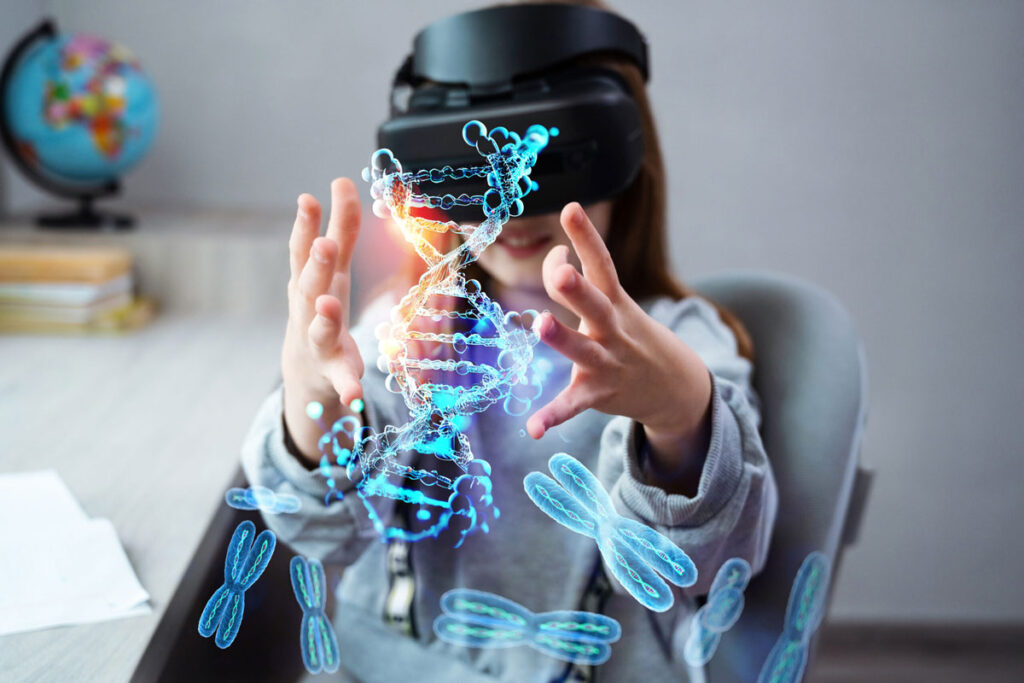
A virtual reality (VR) school is an educational environment where students use immersive technology to experience lessons in three-dimensional, interactive spaces. Instead of simply reading about a concept or watching a video, students can step inside the lesson itself.
In a VR school, learners might:
- Walk through ancient civilizations while studying history
- Explore the human body from the inside during science class
- Visualize complex mathematical concepts in spatial, interactive ways
This approach moves education beyond passive learning and into active, experiential understanding.
How Virtual Reality Enhances Learning
Virtual reality does not replace teachers. It amplifies what great teachers can do.
At its core, VR enhances learning in three key ways:
1. Engagement That Captures Attention
Traditional learning can sometimes struggle to hold a student’s focus. VR creates immersive environments that naturally draw students in, helping them stay engaged and curious.
2. Deeper Conceptual Understanding
When students experience a concept instead of memorizing it, comprehension improves. Abstract ideas become tangible, and learning becomes more intuitive.
3. Learning by Doing
VR allows students to interact, explore, and experiment. This hands-on approach strengthens retention and builds confidence.
What Makes a VR School Different from Traditional Online Learning?
While many online schools rely on video lessons and digital assignments, a virtual reality school adds an entirely new dimension.
| Traditional Online School | Virtual Reality School |
|---|---|
| Screen-based learning | Immersive 3D environments |
| Passive content consumption | Interactive exploration |
| Limited visualization | Spatial, experiential understanding |
The result is a learning experience that feels more like discovery than instruction.
The Role of Teachers in a VR School
A common misconception is that technology replaces educators. In reality, the opposite is true.
Teachers remain at the center of the learning experience. In a VR school, they:
- Guide students through immersive lessons
- Facilitate discussion and critical thinking
- Provide structure, support, and personalized feedback
Technology becomes a tool that empowers teachers to bring lessons to life in ways that were never before possible.
Is a Virtual Reality School Right for Your Family?
Virtual reality schools are designed to support a wide range of learners, including:
- Students who thrive with hands-on, visual learning
- Families seeking flexibility without sacrificing structure
- Learners who benefit from increased engagement and focus
- Students looking for a more modern, innovative education experience
By combining immersive technology with strong academic foundations, VR schools offer a new path forward for families who want more from education.
The Future of Learning Is Already Here
Virtual reality is not a distant concept. It is already reshaping how students learn, understand, and engage with the world around them.
A virtual reality school represents more than just new technology. It represents a shift toward deeper learning, greater accessibility, and more meaningful educational experiences.
For families exploring alternatives to traditional education, it offers something powerful:
The ability for students to truly experience what they are learning.