When families picture online school, they sometimes imagine a perfectly organized home office with a large desk, built-in bookshelves, and a quiet room dedicated entirely to learning.
For most families, that simply isn’t reality.
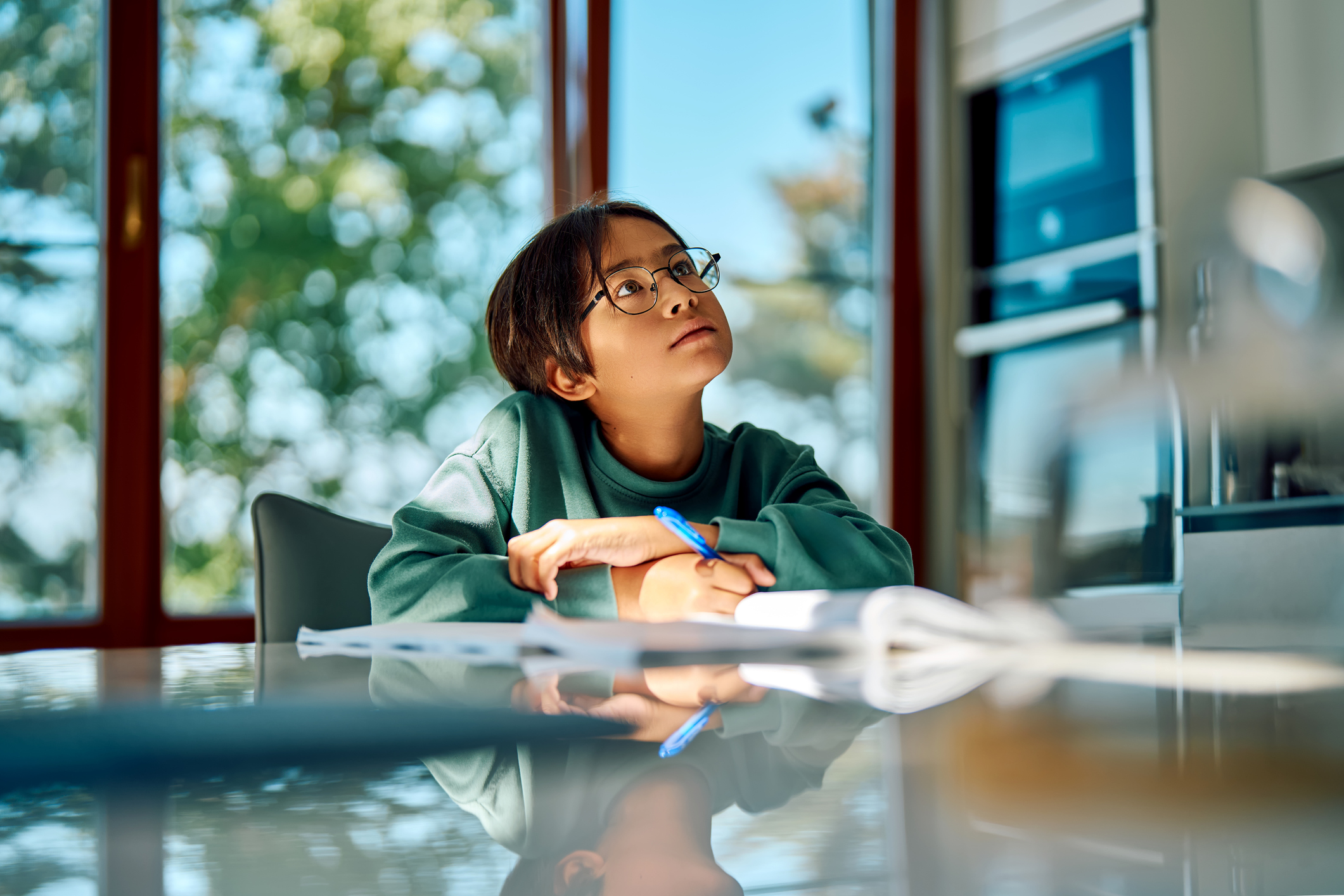
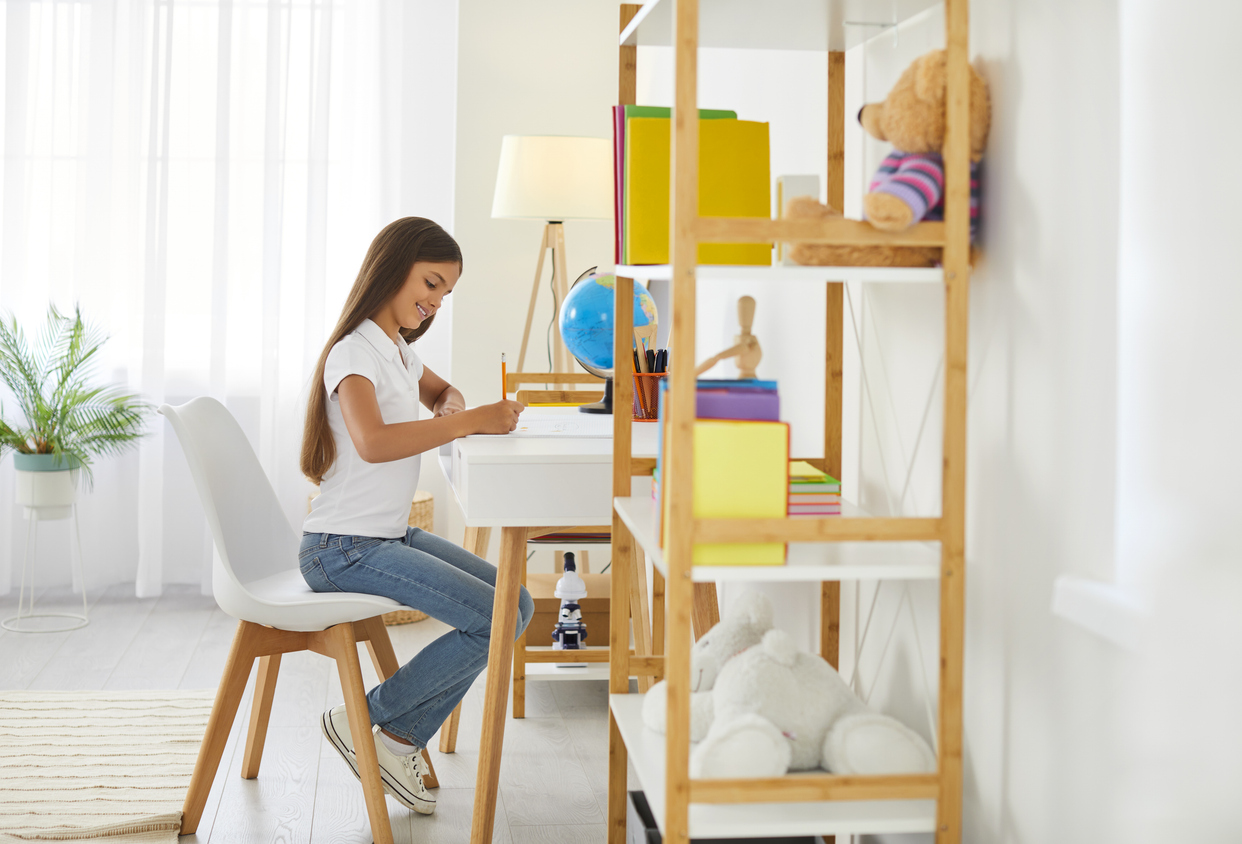
Your child might be learning at the kitchen table, in a corner of their bedroom, at a small desk in the living room, or wherever there happens to be enough space for a laptop and a notebook, and that’s okay.
A successful home learning environment does not require an entire room. What matters most is creating a space that helps your child recognize when it is time to focus, keeps the essentials within reach, and works with the home you already have.
Here are a few ways to create an effective home learning space, even when square footage is limited.
Choose a Consistent Learning Spot
Your child does not necessarily need a dedicated room, but having a consistent place to attend class and complete schoolwork can help establish a routine.
Look for an area of your home that is relatively comfortable and has access to an outlet and reliable internet connection. Depending on your space, that might be:
- One end of the dining room table
- A small desk in a bedroom
- A corner of the living room
- A console table that doubles as a desk during the school day
- A breakfast nook or kitchen counter
- A folding table that can be set up when school begins
Consistency matters more than size. Even a small designated area can help signal that the school day has begun.
Keep School Supplies Portable
If your child’s learning space also serves another purpose after school, you probably do not want notebooks, chargers, pencils, and school supplies taking over the room.
Instead, create a portable school station.
A rolling cart, basket, tote, or small set of drawers can keep everything your child needs together without permanently transforming your dining room into a classroom.
Consider keeping items such as notebooks, pencils, headphones, chargers, sticky notes, and other frequently used supplies in one place. At the end of the school day, everything can be packed away just as easily as it came out.
Pay Attention to What Is Behind the Screen
When choosing a learning space, families often focus on what is directly in front of the student. What is happening around them can matter just as much.
A television playing nearby, siblings moving through the room, or a high-traffic walkway can make it harder to concentrate during a live class.
You do not need complete silence, but try to choose a spot that limits the biggest distractions during school hours.
Headphones can also be helpful, especially in homes where multiple family members are working or learning at the same time.
Make Comfort a Priority
Your child may spend several hours each day learning in their space, so comfort matters.
A chair that supports good posture and a screen positioned at a comfortable height can make a noticeable difference. If the table or desk is too high, consider adding a footrest. If the screen is too low, a laptop stand or even a sturdy stack of books can help raise it.
Natural light is another bonus when available. Positioning a learning space near a window can make the area feel more inviting while helping prevent the space from feeling closed in.
The goal does not need to be Pinterest-perfect. It needs to be comfortable enough for your child to learn.
Reduce Visual Clutter
More decorations do not always create a better learning environment.
In a small space, too many supplies, posters, toys, or other visual distractions can make the area feel busy. Keeping the learning space relatively simple can make it easier for students to focus on what is happening in class.
A few personal touches are still welcome. Your child might add a favorite photo, a small plant, a calendar, or something else that makes the space feel like their own.
Think functional first, decorative second.
Create a “School Starts Here” Routine
When school and home happen in the same place, the boundaries between the two can become blurry.
A short morning routine can help create that separation.
Maybe your child gets dressed, eats breakfast, fills a water bottle, gathers school supplies, and logs in a few minutes before class begins. At the end of the day, they can close the computer, put away their supplies, and physically transition away from the learning space.
Those small routines can help create a mental beginning and end to the school day, even when the classroom is only a few feet from the couch.
Give Students Some Ownership
Whenever possible, let your child have a voice in setting up the space.
Ask where they feel most comfortable learning. Let them choose their school supply container, desk accessories, or organizational system. Older students may already know whether they focus better facing a wall, sitting near a window, or working somewhere with a little background activity.
A learning space is more likely to work when the student using it has helped create it.
Remember That Your Space Can Evolve
You may not get everything right on the first day, and you do not need to.
After a week or two, pay attention to what is working. Maybe your child needs fewer distractions, a more comfortable chair, a different spot for live classes, or easier access to supplies.
One of the advantages of learning from home is the ability to adjust the environment based on what actually helps your child succeed.
The best learning space is not necessarily the biggest, quietest, or most beautifully decorated one. It is the one that works for your student and your family.
Online School Can Fit Into Real Life
Families do not need a dedicated classroom to make online learning work.
At Optima Academy Online, students learn from home while still connecting with teachers, classmates, and a school community. With the right routines and a thoughtfully chosen space, even a small corner of your home can become a place where meaningful learning happens.
Wondering whether online school could be the right fit for your family? Take the OAO Admissions Fit Quiz to learn more.