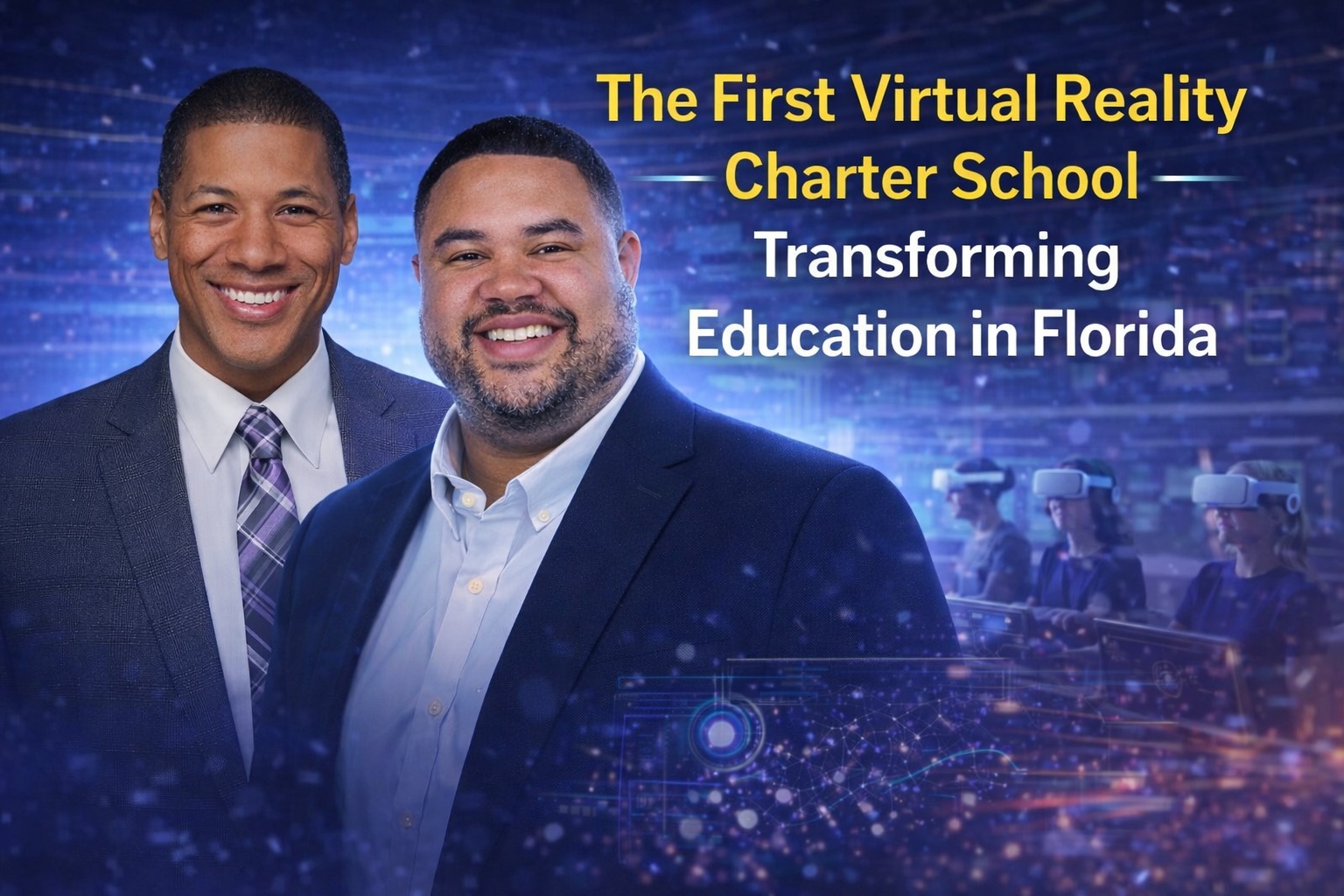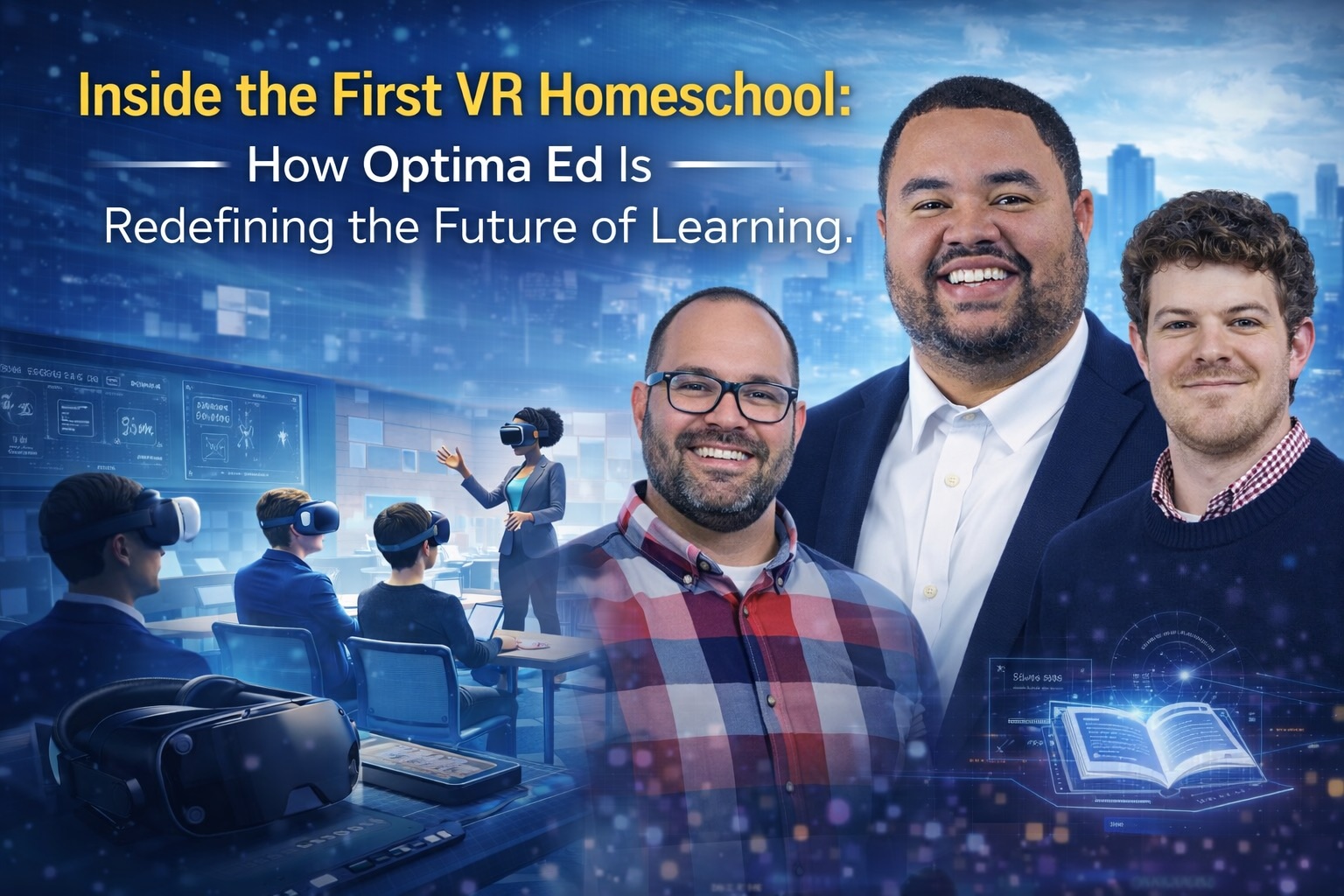
The future of education is no longer theoretical—it’s already here. In a recent episode of the EdTech Insiders podcast, Adam Mangana, Co-Founder and CEO of Optima Ed, shares how virtual reality (VR), artificial intelligence (AI), and school choice are converging to reshape how students learn.
Optima Ed is pioneering what may be one of the most disruptive models in modern education: a fully immersive, VR-based homeschool experience backed by Meta. But this isn’t just about technology—it’s about access, engagement, and rethinking the entire structure of learning.
What Is Optima Ed?
Optima Ed is the first full-time virtual reality homeschool designed to deliver a complete academic experience inside immersive environments. Instead of traditional Zoom classrooms or static textbooks, students enter interactive worlds where they can explore concepts firsthand.
According to Mangana, the goal is simple but powerful: bring world-class education to any student, anywhere. [oai_citation:0‡Buzzsprout](https://edtechinsiders.buzzsprout.com/1877869/episodes/18108152-inside-the-first-vr-homeschool-meta-backed-optima-ed-and-the-next-era-of-learning-with-adam-mangana?utm_source=chatgpt.com)
From Watching to Experiencing: The Power of VR Learning
One of the biggest limitations of traditional education—both in-person and online—is passive learning. Students often watch, read, or listen, but rarely experience.
Virtual reality changes that completely.
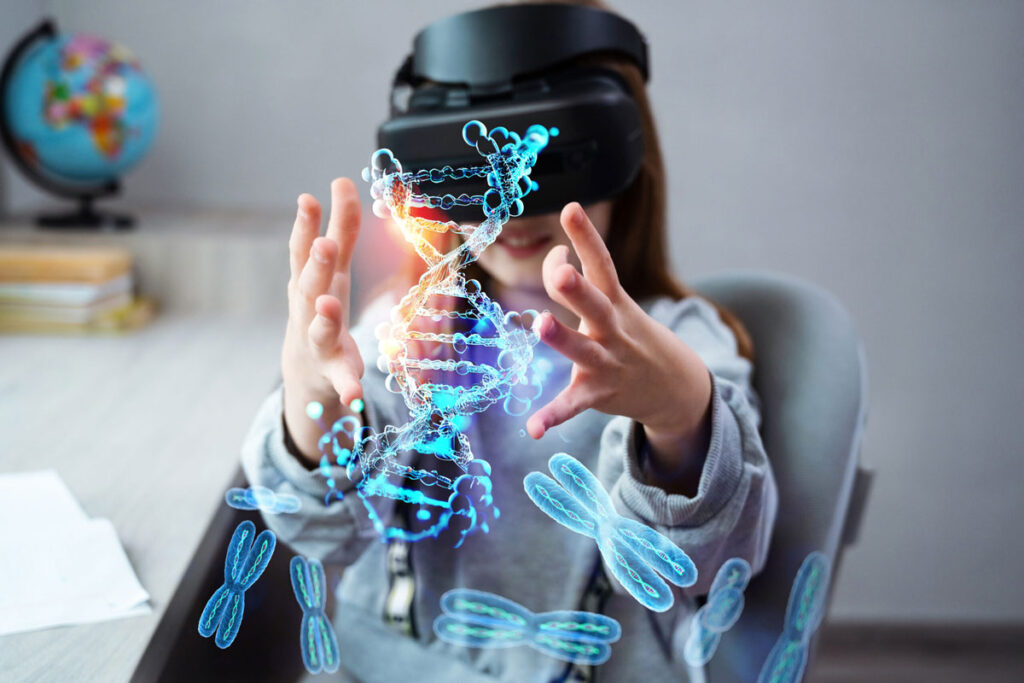
Instead of watching a video about biology, students can step inside a cell. Instead of reading about ancient Greece, they can explore it. This shift from observation to immersion dramatically improves engagement and comprehension.
As highlighted in the podcast, immersive learning allows students to “enter a cell, not just watch one,” creating deeper understanding and retention. [oai_citation:1‡Buzzsprout](https://edtechinsiders.buzzsprout.com/1877869/episodes/18108152-inside-the-first-vr-homeschool-meta-backed-optima-ed-and-the-next-era-of-learning-with-adam-mangana?utm_source=chatgpt.com)
Blending Classical Education with Cutting-Edge Technology
What makes Optima Ed unique is not just its use of VR, but how it combines that technology with a classical education model.
This means students still engage with foundational subjects like history, literature, math, and science—but in a way that is more interactive, contextual, and meaningful.
The result is a hybrid model that respects traditional academic rigor while leveraging modern tools to enhance learning outcomes.
Solving the “Loneliness Problem” of Online School
One of the biggest criticisms of online education is the lack of social interaction. Traditional virtual learning often feels isolating, with students staring at grids of faces on a screen.
Optima Ed addresses this by creating shared virtual environments where students and teachers interact in real time.
Inside these VR classrooms, students can collaborate, communicate, and build relationships—bringing back the social aspect that online education often lacks. [oai_citation:2‡Buzzsprout](https://edtechinsiders.buzzsprout.com/1877869/episodes/18108152-inside-the-first-vr-homeschool-meta-backed-optima-ed-and-the-next-era-of-learning-with-adam-mangana?utm_source=chatgpt.com)
The Role of AI in Personalized Learning
Artificial intelligence plays a critical role in Optima Ed’s model.
AI-powered tutors and digital assistants help personalize the learning experience for each student, adapting to their pace, language, and comprehension level. This creates a more individualized education system—something traditional classrooms struggle to achieve at scale.
In the podcast, Mangana emphasizes that AI is not a shortcut, but a powerful tool to support both students and teachers. [oai_citation:3‡Buzzsprout](https://edtechinsiders.buzzsprout.com/1877869/episodes/18108152-inside-the-first-vr-homeschool-meta-backed-optima-ed-and-the-next-era-of-learning-with-adam-mangana?utm_source=chatgpt.com)
Education Without Boundaries: The Rise of School Choice
Another key theme from the episode is the role of education policy—specifically Education Savings Accounts (ESAs)—in enabling models like Optima Ed.
These programs allow funding to follow the student, giving families more flexibility in choosing how and where their children learn.
This shift is breaking the traditional “zip code barrier” in education, making high-quality learning accessible beyond geographic limitations. [oai_citation:4‡Buzzsprout](https://edtechinsiders.buzzsprout.com/1877869/episodes/18108152-inside-the-first-vr-homeschool-meta-backed-optima-ed-and-the-next-era-of-learning-with-adam-mangana?utm_source=chatgpt.com)
Teachers Without Borders
VR doesn’t just benefit students—it also transforms teaching.
Educators can teach from anywhere in the world while reaching students globally. This creates opportunities to bring top-tier instructors into every home, regardless of location.
It also introduces more flexibility and innovation in how teachers deliver lessons.
“Learning Liberated”: A New Era of Education
At the core of Optima Ed’s vision is what Mangana describes as “learning liberated.”
This means removing the traditional constraints of time, location, and standardized pacing, and replacing them with a system that is immersive, personalized, and accessible.
The combination of VR, AI, and policy innovation is creating a new paradigm—one where education is no longer confined to classrooms, schedules, or outdated systems.
Final Thoughts
The conversation with Adam Mangana offers a clear glimpse into the future of education. Virtual reality is not just an enhancement—it’s a transformation.
As immersive technology continues to evolve, models like Optima Ed are positioning themselves at the forefront of a global shift toward experiential, student-centered learning.
The question is no longer if education will change—but how fast.
Listen to the Full Podcast
To dive deeper into this conversation, listen to the full episode here:
Inside the First VR Homeschool: Meta-Backed Optima Ed and the Next Era of Learning