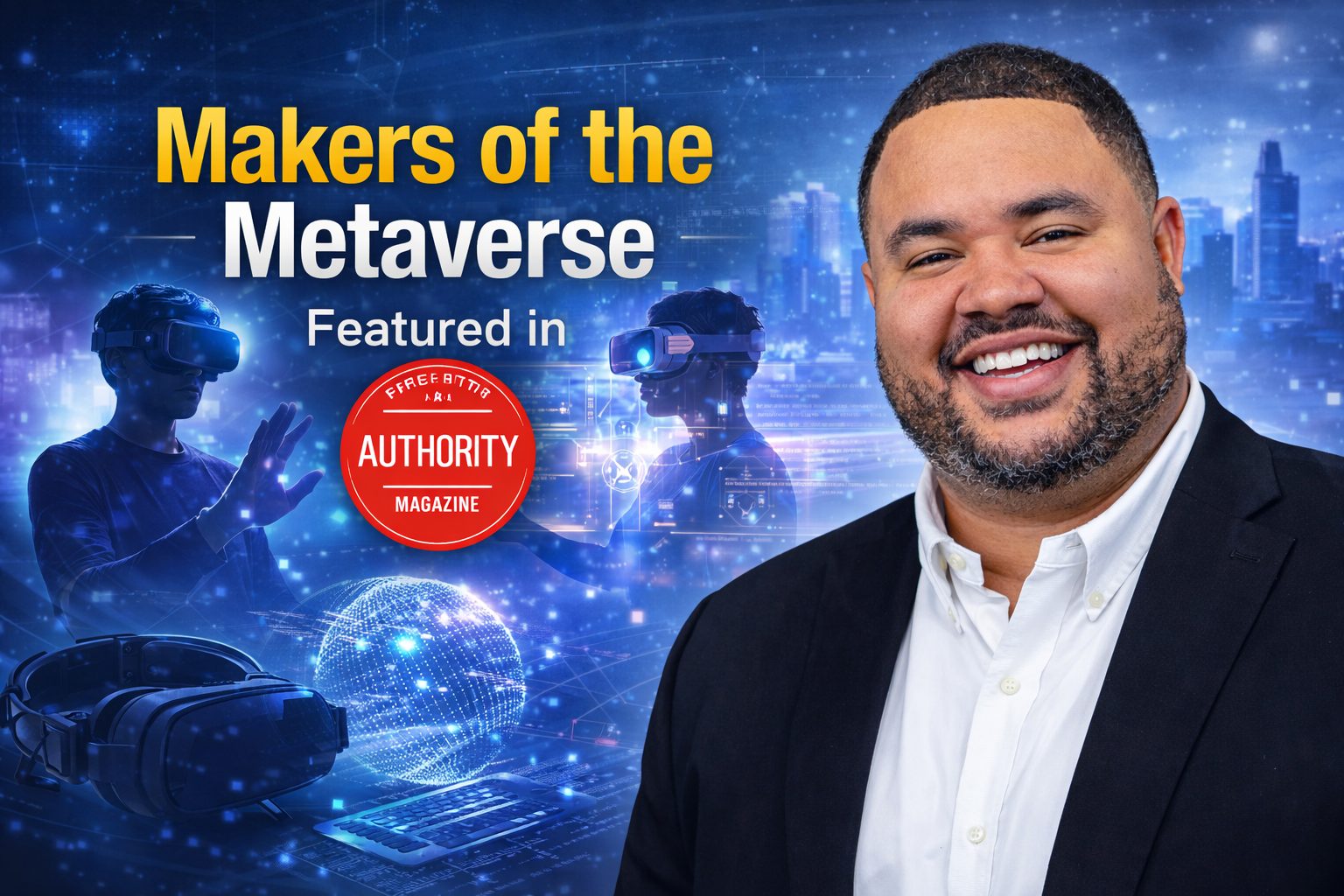
Optima ED President and CEO Adam Mangana was recently featured in Authority Magazine as part of the publication’s “Makers of the Metaverse” interview series. The conversation explores how emerging technologies like virtual reality (VR), augmented reality (AR), and mixed reality are transforming the future of education and creating new opportunities for immersive learning.
In the interview, Mangana shares insights from his career in education and technology, explaining how immersive learning environments can provide students with deeper engagement and more meaningful educational experiences.
From Classical Education to Immersive Learning
Mangana’s journey into immersive technology is rooted in more than 15 years of experience in education, including roles as a teacher, Head of School, and leader of an Extended Reality lab. These experiences helped inspire the creation of Optima ED, where the goal is to combine classical education with advanced technology to expand access to high-quality learning.
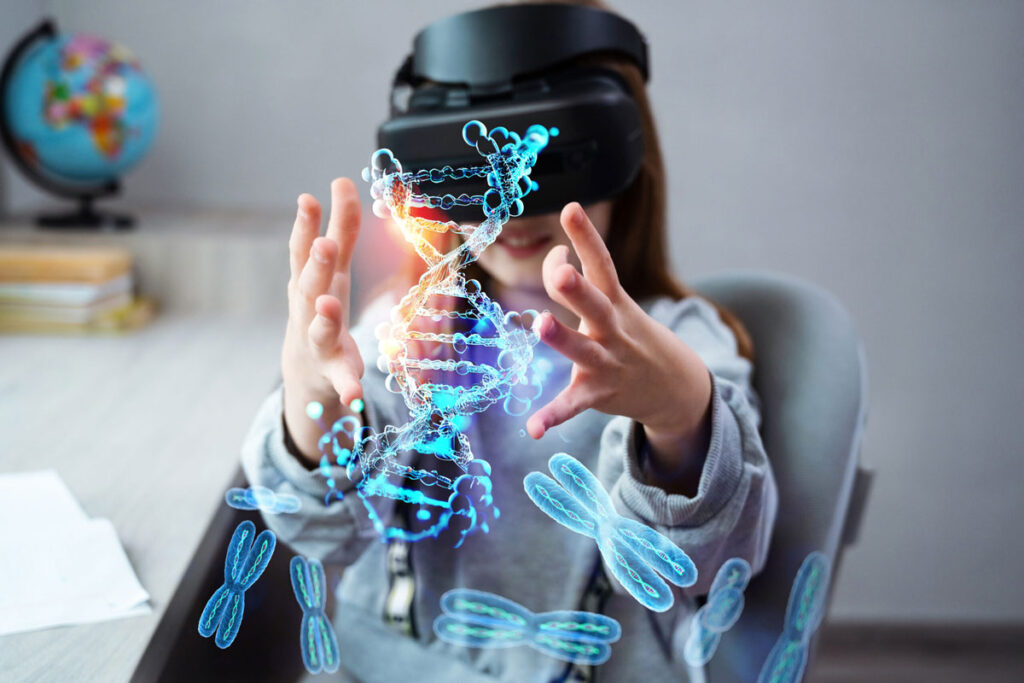
At Optima ED, immersive technology is used to enhance traditional academic subjects. Instead of simply reading about historical events or scientific concepts, students can explore virtual environments that bring those subjects to life.
For example, students might virtually visit historical locations or interact with complex scientific systems in ways that would not be possible in a traditional classroom.
The Power of Immersive Education
One of the key themes in the interview is the ability of immersive technologies to support the whole student experience.
According to Mangana, immersive learning environments can benefit students in several ways:
-
Emotionally: Helping students build confidence through safe environments where mistakes become learning opportunities.
-
Socially: Allowing students to collaborate with peers across geographic boundaries.
-
Cognitively: Engaging multiple senses to improve retention and critical thinking.
Rather than replacing teachers, immersive technologies can strengthen the relationship between educators and students by creating shared learning experiences that feel more interactive and collaborative.
Breaking the Myths About Virtual Learning
Virtual learning is often misunderstood. One common misconception is that online education isolates students or removes human interaction.
However, Mangana argues that when immersive technology is implemented correctly, it can actually enhance community and collaboration.
Students interact with classmates and teachers in shared virtual environments, where they can work together, discuss ideas, and explore learning materials in ways that go beyond passive screen-based learning.
Another misconception is that VR learning is simply “screen time in a headset.” In reality, immersive learning is active and experiential, encouraging students to move, explore, and engage with lessons more deeply.
Building a Career in the VR Education Industry
During the interview, Mangana also shared insights for innovators interested in building careers in the VR and AR education industries.
Some of the principles he highlighted include:
-
Start with a skeptical mindset rather than blindly believing technology hype.
-
Respect the history of education, not just the future of technology.
-
Understand both educational philosophy and business strategy.
-
Be willing to experiment with ideas that may not scale immediately.
-
Focus on a long-term mission that goes beyond any single technology platform.
These ideas reflect Mangana’s belief that immersive technology should be used as a tool to improve education rather than simply as a technological novelty.
Expanding Access to World-Class Education
Ultimately, Mangana’s vision for immersive learning focuses on expanding educational opportunity.
Through virtual environments, students from different parts of the world could explore historical landmarks, collaborate with classmates from different cultures, and engage in educational experiences that might otherwise be inaccessible due to geography or resources.
The goal is not to replace traditional education, but to enhance it by providing students with powerful new ways to explore ideas and develop curiosity about the world.
Read the Full Interview
To learn more about Adam Mangana’s perspective on immersive technology and the future of education, read the full interview published by Authority Magazine.